
Buying a home is one of the biggest financial decisions anyone makes. Whether you’re purchasing your first apartment, investing in a villa, or buying residential land, understanding the legal framework is essential. One of the most important regulations protecting homebuyers today is the Real Estate (Regulation and Development) Act (RERA).
If you’re planning to invest in Tamil Nadu real estate, knowing the RERA guidelines for homebuyers can help you avoid fraud, delayed projects, hidden charges, and legal disputes.
At OREL Properties and Consulting Pvt Ltd, we believe informed buyers make better investment decisions. This guide explains everything you need to know about Tamil Nadu RERA, your rights as a buyer, and how RERA ensures transparency in real estate transactions.
What is RERA?
The Real Estate (Regulation and Development) Act, 2016 (RERA) was introduced by the Government of India to regulate the real estate sector and protect homebuyers.
In Tamil Nadu, the act is implemented through the Tamil Nadu Real Estate Regulatory Authority (TNRERA).
The primary objective of RERA is to:
- Increase transparency
- Ensure timely project completion
- Protect buyers from unfair practices
- Improve accountability among developers
- Standardize real estate transactions
Today, buying a RERA-approved property offers significantly greater legal protection compared to unregistered projects.
Why RERA Matters for Homebuyers ?
Before RERA, buyers often faced issues such as:
- Project delays
- False advertisements
- Hidden costs
- Unauthorized changes in layouts
- Poor construction quality
- Lack of legal accountability
RERA has addressed these challenges by making developers legally responsible for fulfilling their commitments.
For buyers in Chennai and across Tamil Nadu, this means greater confidence and reduced investment risk.
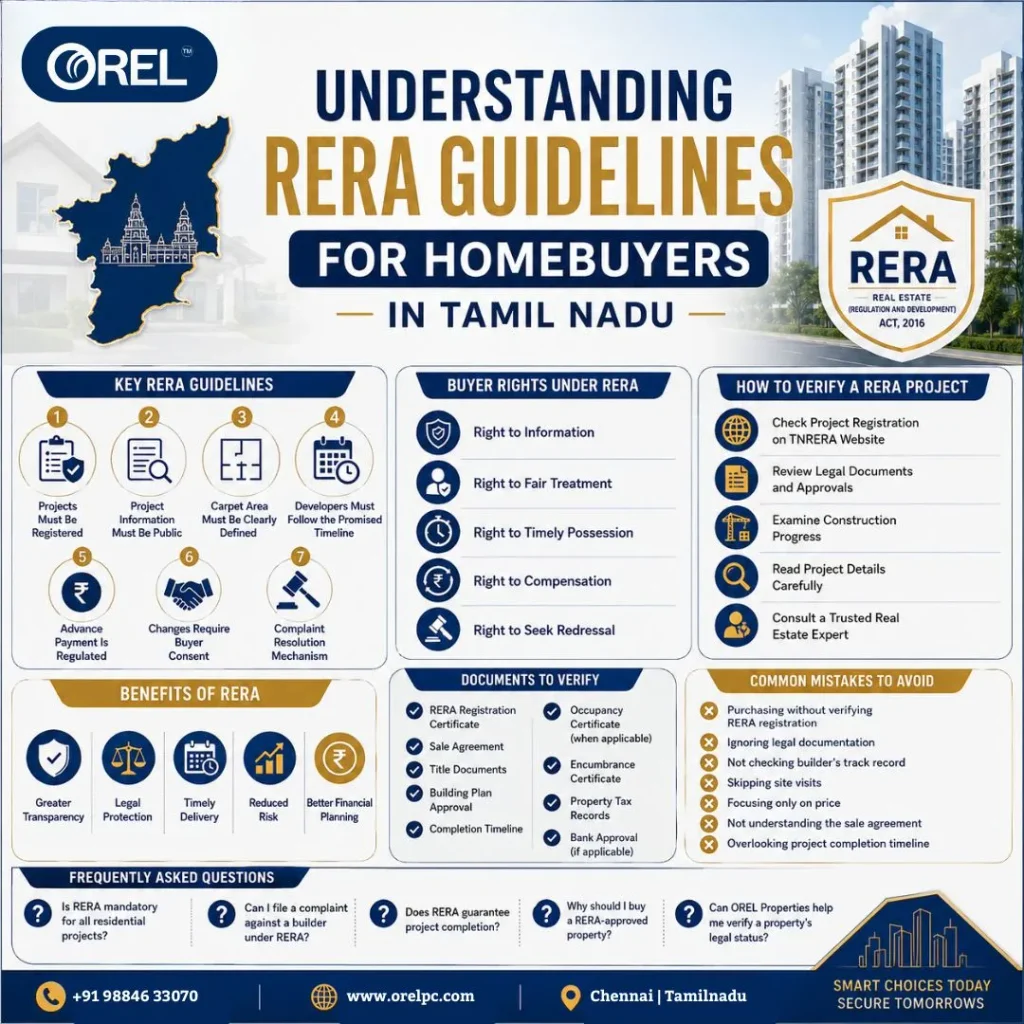
Key RERA Guidelines Every Homebuyer Should Know
1. Every Eligible Project Must Be Registered
Residential and commercial projects that meet the registration criteria must be registered with TNRERA before being marketed or sold. The current registration criteria is real estate project registration with TNRERA is mandatory for all residential and commercial projects where the total land area exceeds 500 square meters or the number of proposed apartments exceeds eight units across all phases.
A registered project receives a unique RERA registration number.
Always verify this number before making any payment.
2. Complete Project Information Must Be Public
Developers are required to disclose important project details, including:
- Approved building plans
- Land ownership documents
- Government approvals
- Construction progress
- Project completion timeline
- Number of units
- Amenities offered
This ensures buyers have access to accurate and verified information.
3. Carpet Area Must Be Clearly Defined
RERA standardizes the definition of carpet area, ensuring buyers pay only for the usable internal area of the apartment.
This eliminates confusion caused by varying methods of calculating built-up or super built-up areas.
4. Developers Must Follow the Promised Timeline
One of RERA’s biggest advantages is accountability for project completion.
If a builder fails to deliver possession within the committed timeframe without valid reasons, buyers may be entitled to compensation as provided under the Act.
5. Advance Payment is Regulated
Builders cannot demand a large advance before signing a formal sale agreement.
This protects buyers from making substantial payments without proper legal documentation.
6. Changes Require Buyer Consent
Developers cannot make major changes to:
- Apartment layout
- Floor plan
- Building specifications
- Common amenities
without obtaining the required consent from affected buyers, as applicable under RERA.
7. Complaint Resolution Mechanism
If a buyer experiences issues such as:
- Delay in possession
- False promises
- Construction defects
- Agreement violations
they can file a complaint before the appropriate RERA authority for resolution.
How to Verify a RERA-Registered Project
Before investing, follow these simple steps:
Check the Project Registration
Verify the project’s RERA registration number.
Review Legal Documents
Check approvals, ownership records, and project documentation.
Examine Construction Progress
Compare the actual site progress with the developer’s updates.
Read Project Details Carefully
Review:
- Completion date
- Unit specifications
- Amenities
- Building plans
Consult a Trusted Real Estate Consultant
Professional guidance helps identify potential risks and ensures informed decision-making.
Benefits of Buying a RERA – approved Property
Greater Transparency
All project details are publicly available, reducing misinformation.
Legal Protection
Buyers have access to a structured legal framework for dispute resolution.
Timely Delivery
Developers are accountable for meeting declared project timelines.
Reduced Risk
Registered projects are subject to regulatory oversight, improving buyer confidence.
Better Financial Planning
Clear agreements and regulated payment structures help avoid unexpected expenses.
Documents Every Homebuyer Should Verify
Before purchasing property, ensure you review, the below (indicative list):
- RERA Registration Certificate
- Sale Agreement
- Title Documents
- Building Plan Approval
- Completion Timeline
- Occupancy Certificate (when applicable)
- Encumbrance Certificate
- Property Tax Records
- Bank Approval (if applicable)
Proper document verification and detailed due diligence helps prevent future legal complications.
Common Mistakes Homebuyers Should Avoid
Many buyers make avoidable mistakes, including:
- Purchasing without verifying RERA registration
- Ignoring legal documentation
- Focusing only on price
- Not checking the builder’s track record
- Skipping site visits
- Overlooking project completion timelines
- Not understanding the sale agreement
Conducting thorough due diligence can significantly reduce investment risks.
Conclusion
Understanding the RERA guidelines for homebuyers in Tamil Nadu is essential for making a safe and informed property purchase. RERA has transformed the real estate sector by promoting transparency, accountability, and buyer protection.
Whether you’re purchasing your dream home or making a long-term investment, choosing a compliant project and seeking professional guidance can make all the difference.
OREL Properties and Consulting Pvt Ltd is committed to helping buyers navigate the property market with confidence. From identifying quality developments to supporting due diligence, our team is here to help you make secure and rewarding real estate investments in Chennai and across Tamil Nadu.